

One of the most challenging, and difficult, things someone can do is start a successful business. Despite the daunting survival statistics, many actually do make it and go on to be successful. What separates those that make it from those that don’t? In some new research compiled by Firstsiteguide, the reasons seem to become more clear. The following is taken directly from that published research:
-
95% of entrepreneurs that create startups have at least a bachelor’s degree.
-
Over 69% of startup companies started as home businesses.
-
How many startups fail?
Take a look at the honest statistics below about how many startup businesses fail, this information will give you an idea of what percentage of startups are successful:
- 9 out of 10 startups don’t make it.
- 20% of startups fall apart after a year.
- 30% of startups close within two years.
- 50% of startups shut their doors within five years.
- 70% of startups dissolve within 10 years.
The primary reason for these numbers is a lack of ability to offer a product for a target market. Many companies aren’t able to generate interest in their products or services. Some companies also struggle with marketing. They don’t have the finances to do it right and present what they have to offer to the right segment of the public.
-
58% of startups have less than $25,000 at their disposal during the startup phase.
-
Only 40% of startups are able to become profitable.
-
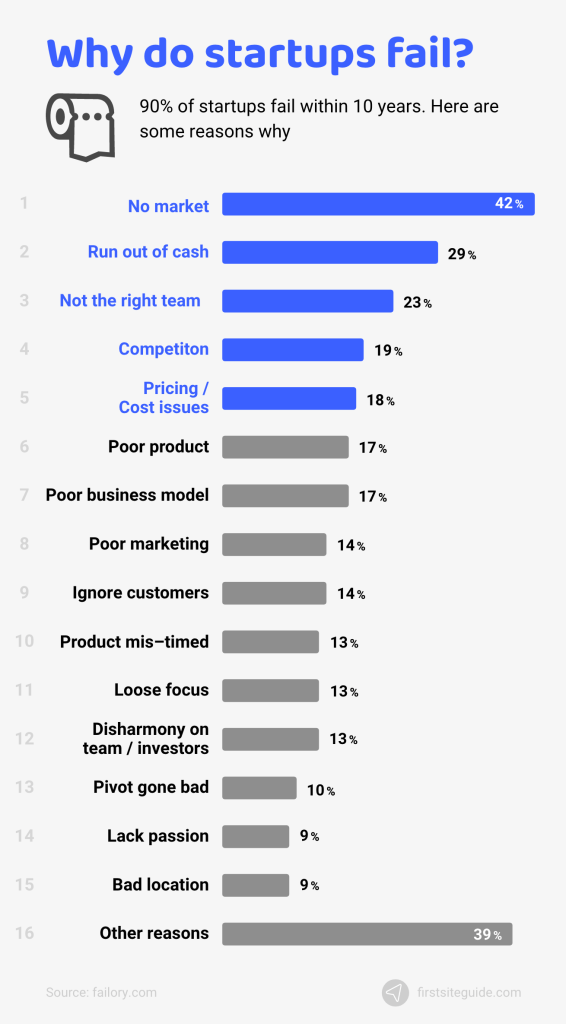
The highest number (42%) of startups fail because they misread the current market demand.
-
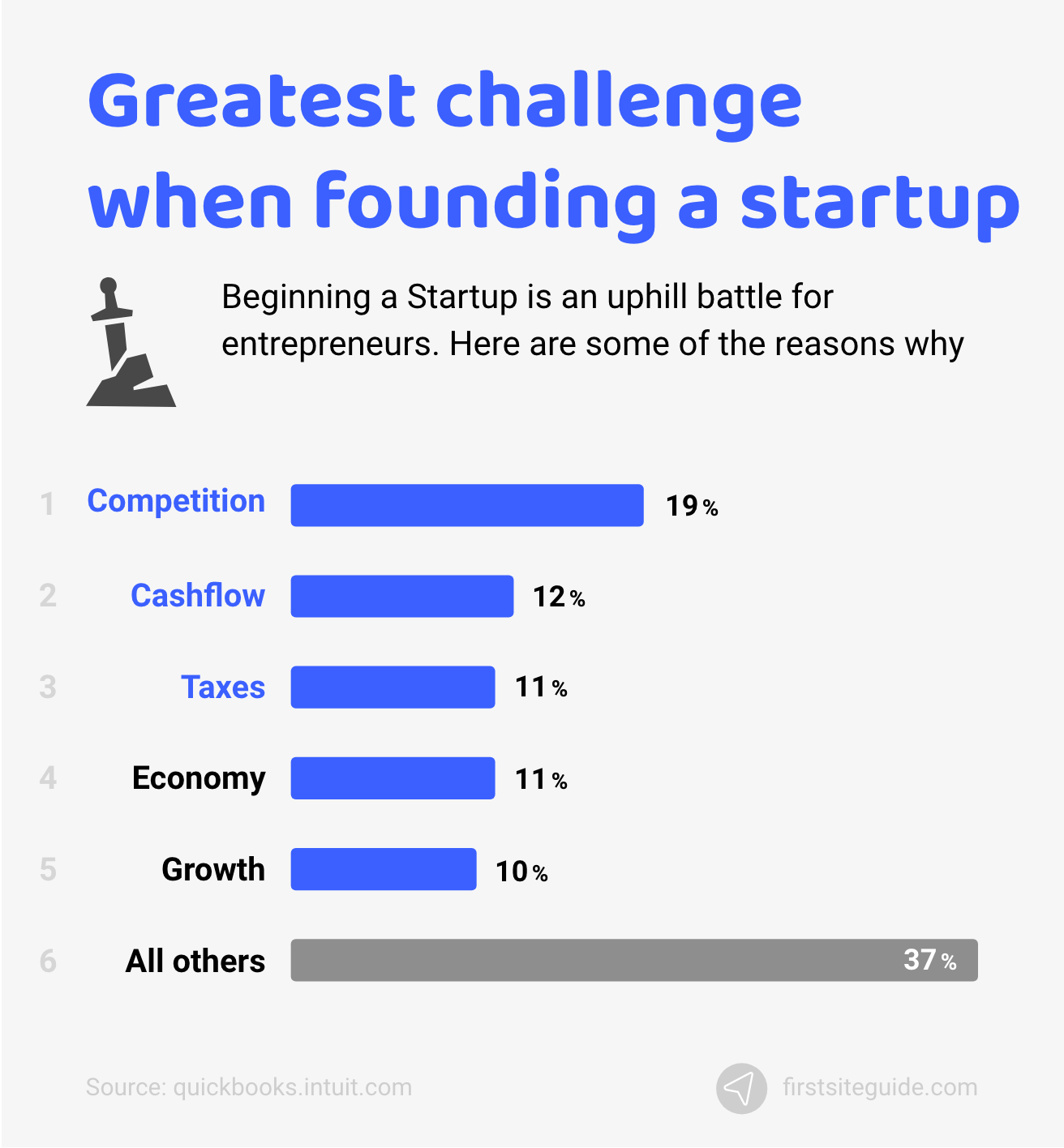
19% of startup leaders agree that competition is the greatest challenge when starting a business.
-
The vast majority of small business startups have a maximum of $10,000 at their disposal during the startup period.
-
¾ of startups used personal savings during the development process.
-
The vast majority of companies need at least $50k in annual revenue to be sustainable for a long period of time.
-
Only a tiny number of startups (0.05%) secure venture capital investments.
-
When asked about their long-term goals, 50% of company leaders said that the most realistic scenarios are acquisition.
-Written by Kevin Sawyer
